


Maintaining your air compressor with regular oil changes is essential to extending its lifecycle.
Why change your air compressor’s oil? Your air compressor’s internal engine relies on regular maintenance to prolong its working life and increase uptime by preventing unexpected breakdowns.
How Often Should You Change the Oil in an Air Compressor?
The kind of compressor you have and how often you use it will affect how often you’ll need to change your air compressor’s oil. The machine’s user manual will have specific information, but a general rule is to change the oil every 100 to 200 hours or every few months. You can also check the oil level with a dipstick or oil glass.
When changing your air compressor’s oil, drain the oil chamber completely. Contaminated oil can degrade the effectiveness of new oil. Check out other tips in our preventive maintenance guide.
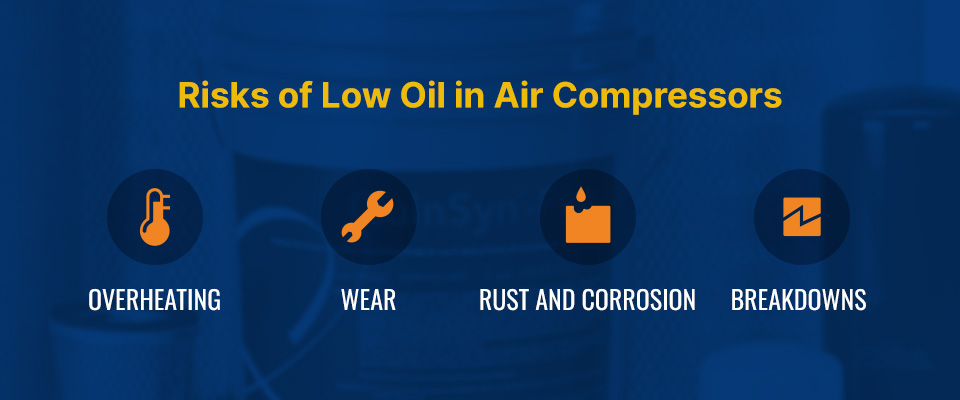
4 Risks of Low Oil in Air Compressors
Contaminated or low oil levels in your air compressor run several risks.
1. Overheating
Compressing air produces heat, and oil absorbs some of that heat. If the oil levels are too low, the air compressor can overheat due to increased friction.
2. Wear
You change your air compressor’s air filter to ensure pure, compressed air. Similarly, it’s essential to empty the contaminated or old oil from your air compressor regularly. The more often you use it, the quicker the debris and nanoparticles build up in the oil. Clean, working lubrication ensures your air compressor runs smoothly and effectively.
3. Rust and Corrosion
Your air compressor’s metal joints and components require adequate oil levels to prevent expensive repairs caused by rusting, general wear and corrosion.
4. Breakdowns
Oils oxidize over time when exposed to water and heat. When oil has broken down, its effectiveness decreases. Eventually, the oil no longer performs its intended purpose, potentially resulting in a costly breakdown.
When to Perform Air Compressor Sampling
We advocate for catching potential problems early. A great way to prevent spontaneous breakdowns is to know how long your oil lasts. An oil analysis measures the viscosity, particle count, water contamination, and total acid number (TAN), helping you determine when you need to change your air compressor’s oil. We recommend conducting an oil analysis every 500 to 2,000 hours, but be sure to check the user manual and warranty.
FAQs
How Do I Know If My Air Compressor Needs Oil?
Knowing when to change air compressor oil usually involves looking at sight glasses or dipsticks to check oil levels. Unusual noises, excessive vibration or higher operating temperatures can also indicate it’s time to check or replace air compressor oil. Keeping a regular inspection schedule helps prevent unexpected downtime.
How Long Does Air Compressor Oil Last?
Air compressor oil longevity depends on usage, environment and compressor type. In typical industrial environments, oil may last 500 to 1,000 operating hours, but this can vary by compressor type and demands. Extreme temperatures, dust or heavy workloads can all reduce oil life and require more frequent oil changes.
How Can I Tell If a Compressor Is Low on Oil?
A quick visual check using the sight glass or dipstick is the simplest way to tell whether your air compressor needs an oil change. The oil should be at the recommended level, usually between the minimum and maximum markers. Other signs of low oil include metal-on-metal sounds during operation or warning lights on more advanced models.
Can You Put Too Much Oil in an Air Compressor?
Yes, overfilling can be just as harmful as running low. Excess oil may foam, reduce lubrication efficiency or enter the compressed air stream, potentially damaging downstream equipment. Always fill according to the air compressor oil capacity specified in your model’s manual.
How Do I Change the Oil in an Air Compressor?
Changing oil on a Quincy compressor starts with shutting down the unit and allowing it to cool. Drain the old oil completely from the sump, then inspect the drain for debris. Refill the unit with the recommended air compressor oil to the proper level, being careful not to exceed the specified capacity. After refilling, run the compressor briefly to circulate the oil, then recheck the level and adjust as necessary. Regular oil changes help maintain performance and prolong the life of internal parts.
Sign Up for a Service Plan Through Quincy Compressor
If you’re unsure about what oil your air compressor requires, check out our guide to choosing the right oil. Professional maintenance can help you get the most of your equipment. At Quincy Compressor, we offer warranty plans for various compressed air and vacuum product services. Contact us today!
